A UPS battery can deliver its specified backup interval and still leave a site exposed to the next outage if the charger cannot restore usable reserve in time. For a lithium conversion or new installation, assess the entire recovery sequence: discharge ending state, rectifier or charger current available after the load is supplied, BMS charge permissions, temperature, parallel-string behavior, and the required readiness deadline. Ask for a time-based recovery test on the proposed UPS and battery combination. A nominal battery capacity or a charger nameplate value alone cannot establish the recovery time. This is a general system-engineering method; the limits and instructions for a particular YZL POWER model must come from its approved documents.
Define what “recovered” means to the operator
Begin with the next event the facility must survive. Some operators require another full design-duration outage before the next shift; others need a shorter protected interval while a generator starts. State the required usable energy at a defined deadline, with the UPS load and environmental assumptions attached. “Fully charged” is often a poor acceptance target because a displayed percentage is an estimate and may not represent the reserve available at the load under the required discharge rate. A useful requirement says what load must remain supported, for how long, by when, and under which operating conditions.
Record the operating sequence that drives the requirement. A data room may face repeated short interruptions, while a remote industrial site may experience a long outage followed by unstable grid restoration. A hospital or process site may have a generator that changes the expected battery duty. These examples illustrate different design questions; they are not evidence of a YZL POWER customer installation. Put the site's actual outage history, generator behavior, maintenance window, and tolerance for reduced reserve into the requirements document. If there are several plausible event patterns, test the demanding credible pattern rather than the easiest single discharge.
Specify the measurement boundary. Is readiness judged at the battery terminals, the DC bus, or the UPS AC output? What counts as successful recovery when the battery is warm, cold, aged, or after a protection event? The UPS owner should approve the observable criterion before procurement. A supplier can then respond to a measurable requirement instead of promising a generic “fast recharge” feature.
Map the energy that actually left the system
Estimate the delivered backup energy from a measured or specified load profile, not only the battery's nominal watt-hours. The load may vary as equipment changes state, cooling restarts, or a generator transfer occurs. UPS conversion losses, DC distribution losses, and battery protection limits influence the energy removed. The engineering model should show its assumptions and provide a way to compare them with a pilot test. Where the installation already exists, use logged voltage, current, power, and event times to improve the estimate.
Note the ending condition after discharge. An outage can end because grid power returned, because a generator came online, because the UPS reached its shutdown criterion, or because the BMS limited discharge. These endings may leave different battery states even when the AC load had the same runtime. Record the UPS and BMS states at the end of each test, including alarms and any manual reset requirement. Recharge cannot be predicted accurately if the starting condition is described only as “battery low.”
Treat reserve calculations as a system design exercise. A simple energy balance can provide an initial sense of scale, but it does not capture a battery's varying charge acceptance, charger taper, temperature derating, or interruptions to charging. Use the arithmetic to expose assumptions and size the test; use the actual approved equipment behavior to sign off the result.
Separate charger nameplate capacity from current available to the battery
The rectifier or UPS charger may be rated for a maximum output, but it also supplies the connected load and may support other auxiliary equipment. Review the power budget during normal operation and during recovery after an outage. Ask whether the charger prioritizes the DC bus or battery, whether it imposes a configurable battery current limit, and what happens when the load rises. A recovery calculation using the entire nameplate current for the battery can be materially optimistic.
Request the charge-current-versus-time profile for the relevant UPS configuration. Check whether the charger reduces current at higher voltage, high internal temperature, low grid voltage, or when other strings are connected. If the UPS has modules, document which modules remain available after a fault and whether the target recovery time must be met with one module unavailable. The design basis should match the site's redundancy requirement; a charger configuration that meets the deadline only when every module is healthy may be unsuitable for a critical installation.
Where settings can be changed, freeze the approved parameter set. Include charge voltage, current limits, temperature compensation behavior if applicable, battery type profile, restart behavior, and firmware revision. The battery supplier and UPS integrator should sign off the same settings. A generic lithium profile selected from a UPS menu is not evidence that its voltage and control behavior match the proposed pack.
Confirm the battery's charge acceptance across the operating envelope
Ask for model-specific continuous charge current, permitted voltage range, temperature limits, and any derating or inhibition logic. The battery may accept less current near a protection boundary or at a different state of charge. Its BMS may open a charge path, request a current reduction over a protocol, or require a manual action after some faults. Do not assume that every LiFePO4 pack responds alike or that the stated peak current is sustainable for an entire recovery period.
Describe the temperature at the battery, not only the room thermostat reading. Cabinets may contain UPS electronics that warm the battery during recharge; a warehouse room can be cool while the battery itself remains warm after discharge. Conversely, a remote site may need to recover reserve after a cold period. The integrator should measure representative battery and ambient temperatures during testing and compare them with the exact model's instructions. Any claim of a particular charging time must state the tested temperature and initial condition.
Review what happens when charging is interrupted. A second grid interruption, maintenance action, or BMS warning may pause the recovery curve. Does charging resume automatically? Does the UPS retain the correct settings? Can the operator see that reserve remains below the required threshold? These questions belong in the acceptance test, because the most consequential failure can be a silent assumption that the battery has recovered when it has not.
Build a recovery model that shows its uncertainty
Make a worksheet with starting energy estimate, energy required for the next event, charging power available after the connected load, expected battery and charger limits, and the readiness deadline. Use time intervals rather than a single average current. In each interval, the permitted charge power is constrained by the most restrictive active limit. The worksheet should make clear which inputs are measured, which come from approved datasheets, and which remain assumptions.
Include the energy conversion and measurement boundaries. The input power available from the grid is not identical to chemical energy added to the battery; charger and battery processes have losses. Use approved test data or measured values for the proposed combination rather than publishing a universal efficiency number. A conservative preliminary estimate can justify a pilot, but it cannot replace one where the margin is narrow.
Present at least a base case and a demanding case. The demanding case might use the highest approved continuous load, a lower permitted charge current, or a temperature at which the model derates. It should still be a credible condition for the site. Do not inflate every variable independently into an impossible combination, and do not hide a narrow failure behind a favorable average. If the required deadline cannot be met, identify the design choice to revisit: charger capacity, UPS load, reserved battery energy, operational procedure, or required readiness time.
Review BMS-to-UPS control before calculating a precise timeline
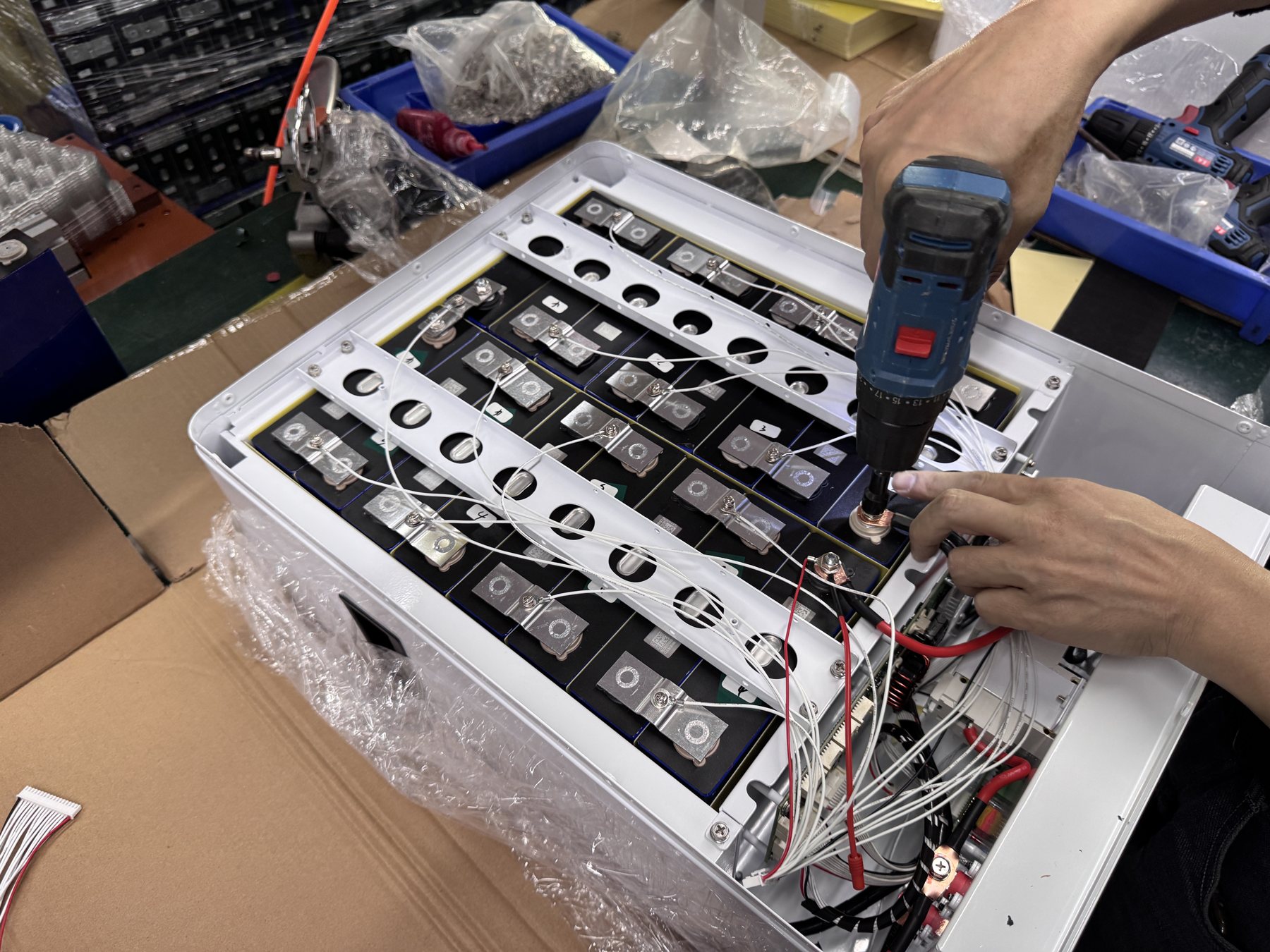
A battery pack's electrical fit is only one part of recharge compatibility. If the UPS expects a battery-management handshake, obtain the message specification and test the exact firmware pairing. Define who controls the maximum charge current, what happens when the data link is lost, and how a warning differs from a protective stop. A port labeled CAN or RS485 does not establish protocol compatibility. Our BMS interface test matrix provides a separate method for documenting signals and failure states.
Look at the UPS operating mode during communication faults. Some combinations continue charging at a fixed setting; others reduce current or stop. The integrator must confirm the approved behavior, because a recovery promise that depends on healthy communications should include monitoring for loss of that path. Test reconnection as well as disconnection. Verify that the UPS does not apply an outdated current limit or wrong battery profile after communication returns.
Make alarm semantics visible to operators. A “battery available” flag can conceal the fact that the reserve target has not yet been restored. Ask which measured or estimated quantities are presented to the site controller, how often they update, and which alarm is raised when the readiness deadline is missed. The purpose is to convert a battery state into an operational decision, not merely to display more numbers.
Examine parallel strings and unequal starting states
If the system uses multiple battery strings, confirm the approved parallel architecture and protection design. Strings can differ in state of charge, temperature, cable resistance, or BMS state after an outage. The integrator should verify how charge current divides and whether one string can accept charge while another is limited or offline. Never assume that adding a second string halves recharge time; the charger may already be the limiting component.
Identify each string separately in the test record. Record voltage, current, temperature, state indication, alarms, and serial or revision identification where available. If a replacement string is introduced, follow the supplier's approved matching and commissioning procedure. Do not parallel packs of unknown compatibility or bypass protection in an attempt to equalize them. The ESS rack expansion review covers broader parallel-module design questions for storage systems.
Calculate readiness from the weakest required operating configuration. If the UPS's protected load depends on both strings, then a recovered average state is insufficient when one string remains unavailable. Define whether the site can operate at reduced autonomy and who authorizes that condition. A clear degraded-mode rule prevents a procurement test from being interpreted more generously than the operator's actual risk policy.
Decide how to handle repeated outages before full recovery
Design for the sequence the site may see, not only for a single clean discharge followed by uninterrupted charging. Specify a second-outage scenario at a defined interval after restoration. Determine the energy available at that moment and the UPS response, including any generator or load-shedding actions. If the second event is a contractual requirement, the acceptance test should witness it at the intended load and record the result.
Repeated events can expose settings or monitoring gaps. The UPS may report normal AC input while the battery reserve is still low. Operators may clear an alarm without noticing that it will recur on the next outage. Build a status view that distinguishes input power restored, charger active, battery accepting charge, and target reserve achieved. These are four different facts. Use the site's existing monitoring platform where possible, with alarm mapping agreed before handover.
Where the deadline cannot be met after a severe first outage, establish a temporary operating plan. Options may include reducing noncritical load, providing generator cover, delaying maintenance that removes redundancy, or changing the recovery target. The operator and safety team must approve the plan. An article cannot prescribe a universal workaround for a critical UPS installation.
Write a pilot test that demonstrates the complete recovery sequence

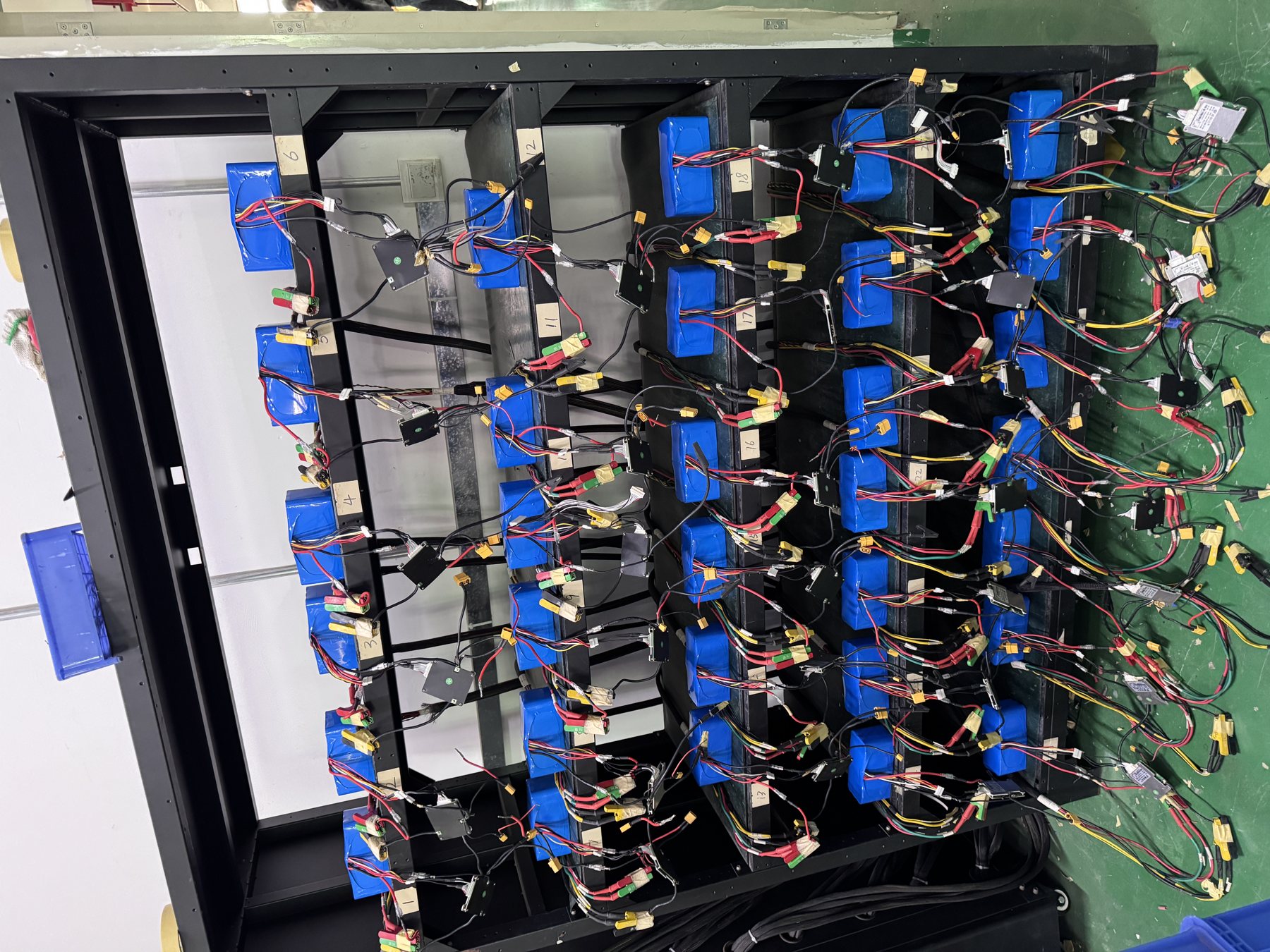
Prepare the test with an approved battery model, UPS configuration, firmware, load profile, wiring drawing, ambient conditions, and safety procedure. Define how discharge will be simulated without putting people or essential operations at risk. Assign the witness for the integrator, battery supplier, and site owner. Record instrument calibration or measurement method where it matters. The test record should allow a later engineer to reproduce what was actually observed.
At the start, capture battery status, UPS settings, temperatures, voltages, currents, alarms, and the load. During the outage simulation, log load and battery values at intervals sufficient to show the changing duty. At restoration, note the exact time and whether the charger immediately delivers current, waits for a delay, or enters a limited mode. Continue logging until the defined readiness criterion is met, not merely until a display reaches a round percentage.
Test the designed exceptions safely: a modest load change, a monitored communication interruption, or a charger module state if the approved procedure permits. Do not intentionally trigger dangerous protective events merely to fill a checklist. Record any deviation, the owner of the corrective action, and whether a repeat test is needed. A successful recovery test applies to the documented configuration and conditions, not every future UPS, room temperature, or battery revision.
Freeze the documents that make the result repeatable
The purchasing package should connect the approved battery model and revision to the UPS model, firmware, charger settings, interface document, electrical drawing, and test result. Include the load assumption, acceptance deadline, and monitoring map. If an installer later changes the charger limit or adds a load, the original recovery conclusion may no longer hold. Revision control makes that change visible and creates a reason to reassess.
Ask suppliers to state exclusions clearly. Does the quotation include BMS protocol adaptation, onsite settings, pilot witnessing, alarm mapping, spare units, and documentation? Which party owns the charger configuration? A quote for battery hardware alone should not be compared with a full system-integration offer as if both carry the same recovery obligation. Separate product supply from system performance responsibility in the commercial record.
Plan for support evidence before a problem arises. Keep the baseline configuration, event logs, installation photographs, battery and UPS serial details, and a safe route for exporting data. The warranty evidence playbook explains how to gather a fault record without assuming which component is responsible. Contract terms, not a generic article, govern any warranty decision.
Use a decision checklist at quotation review
Ask whether the required next-event runtime and readiness deadline are stated in writing. Ask for the exact load curve and the energy remaining after the first event. Confirm the charger output available to the battery after the load is supplied, the battery's charge limits at the expected temperatures, and the BMS-to-UPS control behavior. If any input is missing, mark the recovery estimate provisional. Do not convert a best-case calculation into a firm purchasing promise.
Require a document showing the proposed settings, firmware, wiring, monitoring alarms, and degraded operating mode. Compare every supplier against the same assumptions. A bidder may offer a larger battery that improves first-outage runtime but cannot meet the recharge deadline with the existing charger. Another may propose charger changes that require site electrical work. The comparison should show capital scope, integration work, risk, and the test needed to prove the result.
At approval, identify the evidence gate: desktop review, bench compatibility test, site pilot, and final handover. The gate should name the person who signs off each unresolved interface. A responsible “conditional pending test” response is more useful than an unsupported compatibility claim. The aim is a purchase decision that makes uncertainty visible before fleet rollout.
Common mistakes and how to correct them
The first mistake is dividing nominal battery capacity by charger nameplate power. That calculation omits the load supplied during recovery, charge taper, efficiency, temperature, and BMS behavior. Use it only as a rough lower-bound conversation starter. Replace it with a time-based model and a representative test. State the measurement boundary so the buyer can see what “recovered” means.
The second mistake is accepting a UPS “lithium mode” label without checking settings and protocol. Two devices can both advertise lithium support while using different voltages, current limits, fault messages, or restart rules. Obtain the exact approved profile and firmware pair. Record how the system behaves if communications fail. A successful bench test should include normal and expected abnormal states.
The third mistake is treating a displayed state-of-charge estimate as a certified amount of backup energy. Estimation methods depend on calibration and operating history. Compare the display with measured behavior during the approved pilot and define a readiness criterion tied to the site's load. Another mistake is forgetting the second outage. Test the recovery interval that the operator actually needs, even if the interval exposes a design change.
FAQ
Can a larger battery always reduce recovery risk?
A larger battery can provide more energy for the first event, but its additional capacity may take longer to restore with the same charger. The answer depends on the required second-event reserve, charger headroom, and operating strategy. Compare complete duty cycles rather than battery size in isolation.
Is a charger data sheet enough to approve the design?
No. It provides important limits, but the load, charger configuration, temperature, BMS permissions, UPS firmware, and test conditions determine what current reaches the battery over time. Request a combination-specific recovery test where the deadline matters.
What if the BMS and UPS use different communication protocols?
Treat compatibility as an engineering project. Ask both suppliers for protocol details, approved adapters or firmware work, fault behavior, and a validation plan. Do not assume that a connector or a shared physical bus makes the message semantics compatible.
Should the battery be charged to 100 percent before every operation?
The required operating reserve is a site decision. Some installations may operate to an approved threshold below a displayed 100 percent; others may require full capacity. Use the exact model's operating instructions and the site's next-event requirement. Do not turn a generic percentage into a universal rule.
What should an RFQ include?
Include UPS and charger models, firmware, load profile, outage sequence, required autonomy and recovery deadline, site temperature envelope, battery configuration, monitoring interface, and the acceptance test. Ask the supplier to identify supported items, conditions, exclusions, and documents needed for a firm answer.
Conclusion and next action
Recharge performance is a property of the complete UPS, charger, battery, BMS, load, and site duty. Define the second event and its deadline first, then calculate charger headroom and test the actual recovery curve. Keep the approved settings and observed result with the purchase record. If your project needs a model-specific review, send YZL POWER the UPS model, load profile, site conditions, and target recovery interval through the UPS and telecom solutions page or email our team. We can discuss the battery and interface information needed for a responsible quotation.