A lithium battery shipment can carry a folder full of reports and still be delayed if the paperwork describes a different battery, an outdated configuration, or a shipping arrangement that the logistics provider has not accepted. The buyer's practical task is to build a traceable chain from the ordered model to the delivered configuration, the relevant test and safety documents, the package, and the actual transport booking. Request the document set early, compare it against the purchase specification, and ask the responsible manufacturer and freight professionals to resolve every discrepancy before cargo handover. This is a general procurement review method, not a declaration that one document automatically qualifies a battery for every route, carrier, mode, or destination.

Start with the shipment, not a generic certificate list
A buyer should identify what is being shipped: individual cells, battery packs, equipment containing batteries, or batteries packed with equipment. Record the exact commercial model, manufacturer, revision, nominal electrical details, quantity, packaging arrangement, transport mode, route, destination, and parties responsible for classification. These inputs determine which documents the forwarder and carrier may ask to review. A brochure's statement that a product has “transport certification” does not answer whether the actual consignment matches the tested article or whether the route-specific paperwork is complete.
Write a one-page shipment identity sheet before asking for documents. The sheet should reproduce the approved purchase order and specification, not reinterpret them from a marketing image. Include a photograph of the battery nameplate, outer packaging label, and any equipment nameplate when the battery is installed. Ask the supplier to fill gaps and confirm the revision in writing. When a shipment contains several models, create one row per model. A mixed pallet cannot be checked accurately against a single model's report.
Use a status column for each requested item: received, technically reviewed, revision mismatch, expired or route review pending. “Received” means only that a file exists. It does not mean the file is current, applies to the supplied configuration, or has been accepted by the freight chain. Assign an owner for each open question and a date by which it must be closed. That simple control prevents the forwarder from discovering the difference after a truck has already arrived.
Establish the battery identity chain
The key comparison is between the order, approved drawing, packing list, battery label, test summary, safety data, and any transport assessment. Read the actual manufacturer and model fields in each file. Similar names can refer to different capacities, enclosure variants, or cell arrangements. A file labeled with a close family name may still need a formal explanation or a new assessment for the exact goods. Buyers should request a written cross-reference when the trade name, factory code, and report model are different.
Record whether the pack has changed since the referenced test. A change in cell, series or parallel layout, battery management system, enclosure, terminals, or protective design may matter to the manufacturer’s compliance determination. Do not decide that a change is immaterial because the nominal voltage and capacity remain close. Have the responsible technical and compliance personnel explain which revision is covered and why. Save the answer with the shipment record so the same question does not recur at customs or during a claim.
Serial numbers and batch identifiers serve a different purpose from model names. They help connect physical units to production and shipment records, but a serial list alone does not prove that the product type in a report is the delivered type. Ask for the model mapping first, then use serial or lot information to establish traceability within that model. For replacement units, check the replacement revision independently; an old project approval should not silently migrate to a redesigned pack.
Read a test summary as a technical record
A UN 38.3 test summary is often requested in lithium battery logistics. Buyers should examine the named manufacturer, battery description, test report reference, test laboratory, date, and contact information, then compare the described battery with the ordered model. The existence of a PDF with “UN38.3” in its filename is not a substitute for reading its contents. Where a summary and the underlying report show different capacity or construction information, hold the document review open and ask the issuer or manufacturer for a corrected, traceable explanation.
A summary describes testing for a particular article and scope; it is not a universal shipping permit. The shipment still needs appropriate classification, packaging, marks, labels, declarations, and acceptance under the rules applicable to the actual route and mode. Those decisions belong with qualified dangerous-goods and logistics personnel. Buyers can nevertheless prevent predictable delays by checking that the summary is legible, complete, internally consistent, and linked to the correct battery before the booking is finalized.
Do not infer that a test result for a cell automatically covers a finished battery pack. The physical product supplied to the buyer may include a different assembly, enclosure, BMS, or energy configuration. Request a clear statement from the responsible manufacturer about how the evidence applies to that supplied product. If the answer depends on an engineering family or variant justification, keep that justification with the controlled document package and ensure the forwarder knows which model is actually being shipped.
Review the safety information for the supplied configuration
A safety data sheet or similar safety document helps handlers understand hazards, emergency measures, storage considerations, and product identification. Compare the manufacturer and product description with the order and the nameplate. Check its revision date and contact details. If a PDF describes a different chemistry or a legacy brand, ask for clarification rather than editing the file yourself. The buyer should never paste a new model number onto an unrelated sheet.
A safety sheet is only one part of the information chain. It does not prove that packaging, transport classification, or destination acceptance is correct. The forwarder may request other documents, and requirements can vary by mode, carrier, jurisdiction, and product arrangement. Treat the sheet as evidence to review, not a shortcut that closes the entire logistics file. When the supplier has multiple factories or legal entities, identify who issued each document and whether that entity is responsible for the delivered goods.
For practical review, ask the supplier to supply the exact current PDF rather than a screenshot from a chat. Preserve the original filename and revision, then record the version used for each shipment. If a corrected sheet arrives, do not erase the prior version from the transaction archive; mark it superseded and explain why. Version history is useful if a warehouse, forwarder, or customer later asks which instructions accompanied a specific lot.

Separate product evidence from route-specific decisions
Battery test evidence and a transport booking answer different questions. Test evidence relates to the defined battery article. A sea, air, road, or multimodal shipment also requires a route-specific review of classification, packing, quantity, carrier acceptance, destination rules, and current paperwork. The buyer should ask the forwarder to confirm what it needs for the actual consignment. A document accepted for an earlier sea shipment should not be assumed sufficient for a new air booking.
The practical handoff is a package review call involving the supplier, buyer, and qualified logistics provider. Show the model mapping, document revisions, package type, unit count, transport mode, and proposed timetable. Ask the provider to identify any missing evidence before a pickup date is promised. Document who will prepare shipping declarations and who will check marks and labels. The objective is a controlled decision, not an informal assurance that “we shipped this before.”
Dates matter. Some route or destination assessments may have a stated validity period, while other records need review when the product or rules change. Read the period printed on each document and verify whether it applies on the planned dispatch date. If a previously issued assessment has expired, obtain an updated assessment or a written decision from the responsible party; do not change a date in the old file or imply that a general test report extends its validity.
Make the package visible to reviewers
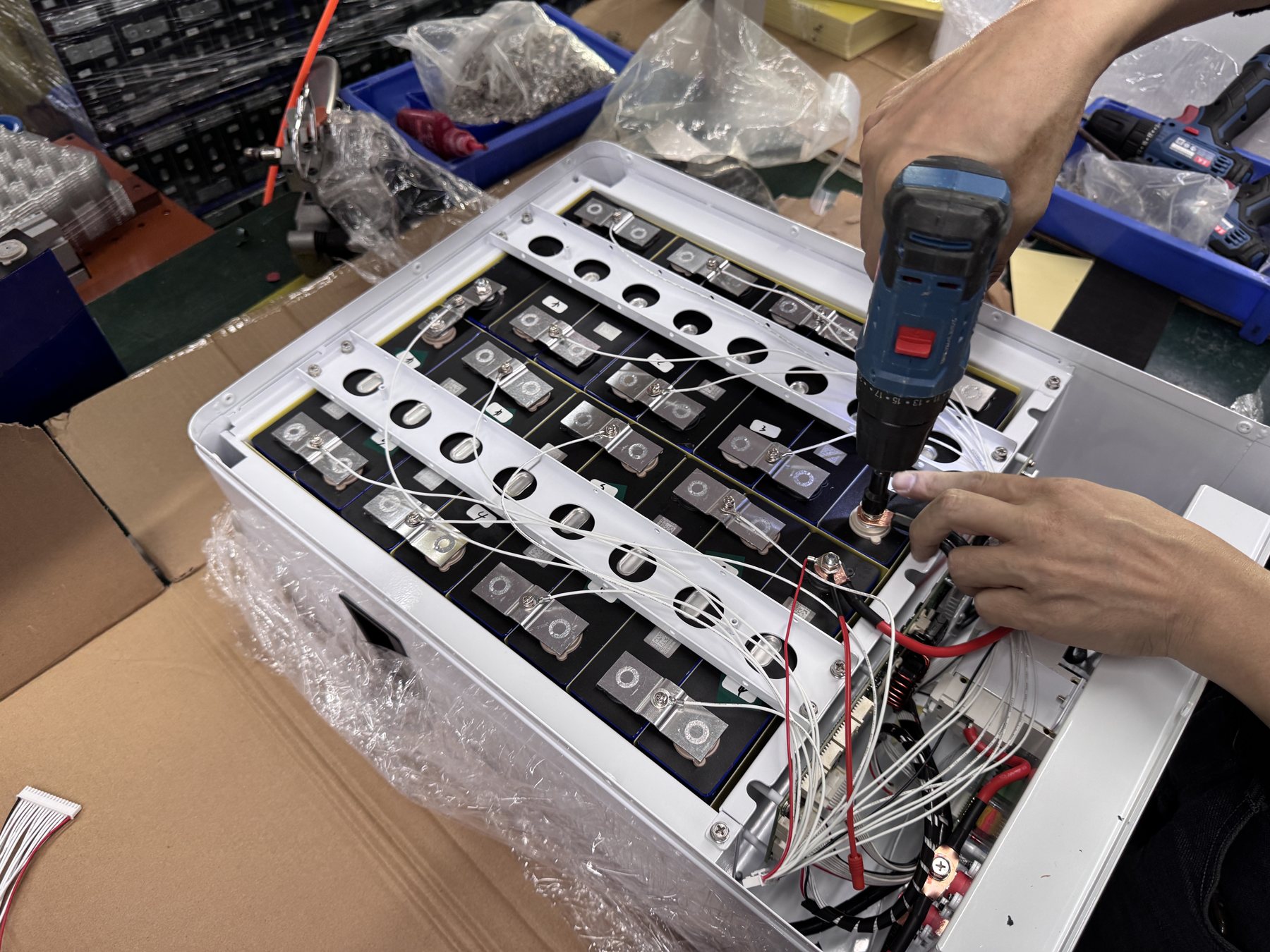
Ask for photographs of the actual packed units, not only studio product images. Useful views show the closed outer package, readable marks and labels, protection of terminals, internal restraint where inspection is possible, palletization, and the packed equipment configuration. Photograph the packaging process and a representative completed carton before bulk pickup. The buyer can then compare the packing list and logistics instructions with what will physically reach the carrier.
Photographs do not replace a packaging design review. A photo may show a neat box but cannot establish material specification, performance, or compliance for a specific mode. The packer and qualified logistics provider should determine the approved packing method. The buyer's role is to detect inconsistencies: an unprotected spare connector, a label that names a different model, a carton count that differs from the declaration, or a pallet that prevents required marks from being seen.
For recurring OEM shipments, approve a packaging specification by revision. It should identify the unit orientation, restraints, protection against short circuit, carton or crate components, label locations, and any model-specific variations. When engineering changes the battery housing or connector, review the packaging drawing again. A durable process is more reliable than reconstructing the same instructions from photographs every month.
Check the commercial and transport documents together
The invoice, packing list, purchase order, shipping declaration, and technical evidence should tell a consistent story. Compare the model description, quantities, net and gross weights, package counts, consignee details, and shipping terms. A discrepancy in gross weight may reflect packaging changes rather than a battery change, but it still requires explanation before documents are issued. The buyer should avoid guessing which document is “correct” when two documents disagree.
Create a cross-check matrix with one column for the source of truth and one for each outward-facing file. For example, the approved order and product drawing govern model identity, the packing record governs actual carton count and gross weight, and the booked route governs mode-specific paperwork. Have the supplier correct the originating record and regenerate dependent files. Editing only the invoice to make its number match a draft declaration can conceal the real error.
If several product variants share a shipment, list them separately wherever the commercial and transport workflow requires separate identification. The carton label, packing list row, and model-specific evidence should remain traceable. This is especially important for pilot orders that combine prototypes and production units. A prototype with a different cell or firmware revision should not be quietly described as identical to the standard production model.
Build a document-control checklist before payment or pickup
The review package should include the approved specification, model and revision mapping, relevant test summary or report reference, current safety information, any required route assessment, packaging specification, photographs, invoice, packing list, and the forwarder’s acceptance instructions. Not every route requires the same document list. The list is a starting point for an informed review with the responsible parties, not a universal legal checklist.
Give each document an owner and an acceptance criterion. “UN38.3 file received” is weak; “test summary identifies the ordered pack model and revision, matching the nameplate or supported by written cross-reference” is actionable. “Packaging confirmed” is weak; “actual package photos and the approved packaging revision have been reviewed by the designated logistics provider” can be verified. An open item should carry a reason, corrective action, and release decision.
Hold a short pre-dispatch gate. The buyer confirms commercial identity; engineering confirms the supplied configuration; the manufacturer confirms product evidence; the forwarder confirms route and carrier requirements; the packer confirms the actual packed goods. Record the final reviewed file versions and the people who approved the handoff. This prevents a document added at the last minute from silently replacing the package that was reviewed earlier.
Decide what to do when documents disagree
Do not solve a conflict by choosing the most favorable number. First identify whether the discrepancy is clerical, a model-code translation, a physical product change, or an evidence-scope problem. A typo in a packing list may be corrected through normal document control. A different capacity on a test summary may require technical review and issuer clarification. A different cell or pack architecture can require a deeper reassessment before shipment.
Write the question precisely: “The order says model A, the nameplate shows model B, and the test summary lists model C. What controlled evidence connects these descriptions to the delivered configuration?” A precise request is more useful than asking for “the latest certificate.” Ask for a response that identifies the document, revision, author, and affected lots. Save that response with the original files, and do not erase evidence of the previous conflict.
If a supplier cannot resolve the mismatch before pickup, delay the release decision and let the qualified logistics provider advise the next compliant step. The cost of a short review is usually easier to manage than a cargo hold with uncertain paperwork. For urgent replacements, use the same identity gate; urgency should change escalation speed, not the standard of evidence.
Treat certificates and factory claims as model-specific
A buyer may receive certificates about a cell, a battery pack, a factory process, or a legal entity. Those are different claims. A cell certificate does not automatically certify every pack built with that cell. A factory audit does not prove transport compliance for a specific battery. A report for one pack model cannot be presented as a blanket approval for the whole catalogue. Record exactly what each file names, who issued it, and what dates or conditions it contains.
When marketing copy says “certified battery,” ask which standard, product model, tested configuration, issuing body, and validity or revision apply. If that chain cannot be shown, use a narrower statement in procurement documents and public material. The same discipline helps buyers compare suppliers fairly: one vendor may offer a relevant pack-level report while another supplies only a cell-level document, and both files may be genuine but answer different questions.
For YZL POWER inquiries, request evidence for the exact proposed model and destination rather than assuming every product shares the same reports. The company’s product directions include energy storage, backup, industrial packs, and lead-acid replacement; the evidence package should follow the selected configuration. See the product overview and quality approach for the appropriate project discussion.
Common buyer mistakes and a better release rule
The first mistake is treating a file name as proof. A PDF can have the expected words and still identify another manufacturer, capacity, or revision. The second is requesting paperwork after production and freight booking are fixed. At that point, a correction can affect pickup, carrier selection, and customer delivery promises. The third is treating logistics approval as a supplier-only task; the buyer often controls the purchase specification and must resolve trade-name mappings. The fourth is placing all document questions in one email without identifying the exact conflicting fields.
A better rule is to release the shipment only when the physical goods, controlled specification, product evidence, packing record, and logistics instructions can be connected without unexplained gaps. Keep a written exception log. If a document is pending, record who has authority to accept the risk and whether the forwarder or carrier has accepted the arrangement. “We sent the files” is not a release decision; “the named reviewer accepted the exact model and route package on this date” is a defensible record.
FAQ
Does one UN 38.3 report cover every battery using the same cell?
No universal conclusion follows from the shared cell alone. The finished battery may differ in electrical configuration, enclosure, protection system, or other relevant design details. Ask the responsible manufacturer and qualified transport adviser to explain the report scope for the exact supplied pack. Preserve their written model mapping and any revision analysis.
Can the buyer use an older sea transport assessment for a new shipment?
Check the document’s stated period, described goods, route, and applicable current requirements with the issuing party or forwarder. An older document is useful history, but it should not be assumed valid for a later booking. If the document expired or the goods changed, request a current decision before making a shipping promise.
Is an MSDS enough to book the cargo?
A safety sheet provides important product and handling information, but the shipment also needs the applicable classification, packaging, marks, labels, declarations, and carrier acceptance. The exact requirements depend on the consignment and route. Let qualified logistics personnel identify the needed set.
What if the trade name differs from the report model?
Ask for a controlled cross-reference that identifies both names, the physical configuration, the responsible legal entity, and the applicable document revision. Verify that the nameplate, order, packing list, and report can be traced through that mapping. Do not rename a third-party report or assume similar spelling proves identity.
Should a procurement team publish all certificates on its website?
Only publish files after checking scope, current status, ownership, and permission to disclose. A buyer should be able to request model-specific evidence during an RFQ, but a public certificate image without context can imply broader coverage than the document supports. Keep the exact model and standard attached to every public claim.
Conclusion and next action
Transport paperwork is reliable when it describes the same physical goods that the buyer ordered and the forwarder will move. Start with a model-and-revision identity sheet, compare every report and label against it, review the package and route with qualified logistics personnel, and close mismatches before pickup. For a specific YZL POWER battery project, send the intended model, destination, transport mode, and required delivery date to [email protected]. The team can identify which product evidence needs model-level review; the carrier and qualified freight professionals make the transport acceptance decision. Buyers planning a broader qualification program may also use our industrial pilot validation guide and battery warranty evidence checklist.