The most important work between delivery and first operation is controlled verification. A battery pack that passed a supplier's final inspection still enters a new electrical system, physical environment and chain of custody. The receiving team should check identity and shipping condition, the installer should confirm the approved drawing and protection scheme, and the commissioning engineer should record the exact host settings and a safe functional test. Only then should the owner accept the system for routine use. Treating commissioning as “connect the cable and see whether it turns on” creates avoidable disputes and difficult fault investigations.
This article is a general field workflow for B2B integrators and equipment owners. It is not an installation manual for any specific pack, permission to work on energized equipment, or a substitute for qualified personnel and local requirements. The exact model's approved manual, project drawing, safety instructions and contract take precedence. YZL POWER source materials describe lithium battery PACK assembly, OEM/ODM engineering, model-specific documentation and a support evidence process; any final installation or service limits must be confirmed for the supplied model.

Make the commissioning boundary explicit before the shipment arrives
A useful handover plan starts before the truck reaches the site. Identify the owner, receiving party, installer, system integrator and battery supplier. State who may accept a damaged package, who authorizes energization, who owns controller settings and who signs the final record. These roles often belong to different companies. If responsibility is unclear, a field technician may be pressured to power a questionable unit because the project schedule is tight. Agree on hold points and escalation contacts in advance.
Freeze the expected configuration: order or purchase reference, battery model, quantity, hardware revision, BMS firmware where applicable, required accessories, drawing revision, mating connector, cable schedule, protection devices, host equipment and firmware. Keep the approved installation procedure accessible at the site. A carton label, quotation and drawing should all describe the same configuration. If they do not, place the affected unit on hold and resolve the discrepancy before installation.
Separate three gates in the plan. Receiving acceptance confirms identity, completeness and visible shipping condition. Installation approval confirms the mechanical and electrical assembly against the approved design. Functional acceptance confirms the battery and host behave together under controlled conditions. Passing one gate does not imply the next. A neat carton cannot prove electrical compatibility; a battery that powers on cannot prove that it is safely mounted or correctly monitored.
Prepare a small evidence packet
A practical packet includes the final drawing, approved battery and host specifications, serial-number list, cable and connector schedule, protection settings, communication document, test plan, risk controls and required model-specific shipping or compliance files. Add blank spaces for measurements, dates, technician names and exceptions. The packet need not be bureaucratic; its purpose is to prevent key observations from disappearing into personal messages. One revision-controlled packet is better than several partly overlapping spreadsheets.
Inspect the shipment before unpacking or accepting it
Compare the consignment with the purchase and packing documents. Count units and packages, photograph labels, and note visible compression, punctures, water exposure, broken seals or signs that a pallet shifted. Preserve the outer packaging until the condition is documented. A packing photo is not proof of transport damage or its absence; the receiving record should show the actual condition at destination. Where a carrier notation is required, follow the contract and carrier procedure before signing an unqualified receipt.
Do not open or energize a package with signs of heat, smoke, unusual odor, leakage, swelling or severe impact. Isolate the area according to the site's emergency process and contact qualified personnel. The battery supplier's support materials emphasize safety-first handling and evidence collection, but this public article does not replace local emergency instructions. Never ask an untrained receiver to test a suspect battery because a deadline is approaching.
For apparently sound packages, document serial numbers and product labels against the approved list. Check that the delivered case, mounting hardware, connector, cable length and accessories match the project revision. If a substitution was approved, attach that approval and identify the affected units. Do not assume a change is minor because the voltage and capacity labels match. A connector or BMS revision can change the commissioning procedure.
Protect the battery during temporary storage
A project may wait days or weeks between delivery and installation. Choose a storage location consistent with the supplied model's instructions and site safety plan. Keep units protected from damage, unauthorized connection, water exposure and incompatible materials. Record the storage start date, location, serial numbers and any inspection or state-of-charge requirement specified by the manufacturer. Do not invent a universal storage charge percentage or inspection interval; those are model- and condition-dependent.
If packaging is opened for inspection, preserve identification and protective covers. Do not stack a module in a way that exceeds its approved packing or handling design. Keep terminals protected against accidental contact and prevent loose hardware from entering the enclosure. If a unit has been in storage beyond the supplier's stated period, ask for the approved reinspection or recharge procedure before installation. A long-stored pack can look unchanged while its readiness requires confirmation.
Storage records also help identify responsibility if a unit arrives intact but is later damaged by site handling. Note moves between warehouse, subcontractor and installation site, including visible condition at each transfer. This is especially valuable for a phased rollout where identical-looking modules may be assigned to different cabinets. A clear chain of custody reduces confusion without presuming fault.
Reconcile the actual site with the approved design
Before moving a pack into a rack or machine, compare the real bay with the latest drawing. Measure clearances, check shelf or floor loading, lifting access, cable path, ventilation space, door swing and service reach. Confirm the orientation and mounting points specified for the exact model. Labels, disconnects and service connectors should remain accessible after installation. A case that fits into an opening may still prevent safe removal or force an unacceptable cable bend.
Inspect the environment at the battery location. The site may be hotter, colder, dustier or wetter than the room where the design was prepared. Verify cabinet protection, drainage, cooling and nearby heat sources against the approved requirements. A device listed as “indoor” on the procurement form does not automatically suit an outdoor cabinet with failed cooling. Record any difference and obtain engineering approval before adapting the installation in the field.
Check that the actual rectifier, inverter, UPS or equipment controller matches the model and firmware used in the compatibility review. A different host revision may require a new parameter set or communication test. Likewise, identify any existing battery bank or parallel string that will share the bus. Do not connect a new pack to an unreviewed arrangement simply because the connectors appear to fit. The industrial battery pilot validation plan explains how changes should be controlled before volume release; commissioning applies the approved configuration at each installed site.
Check wiring and protection before energization
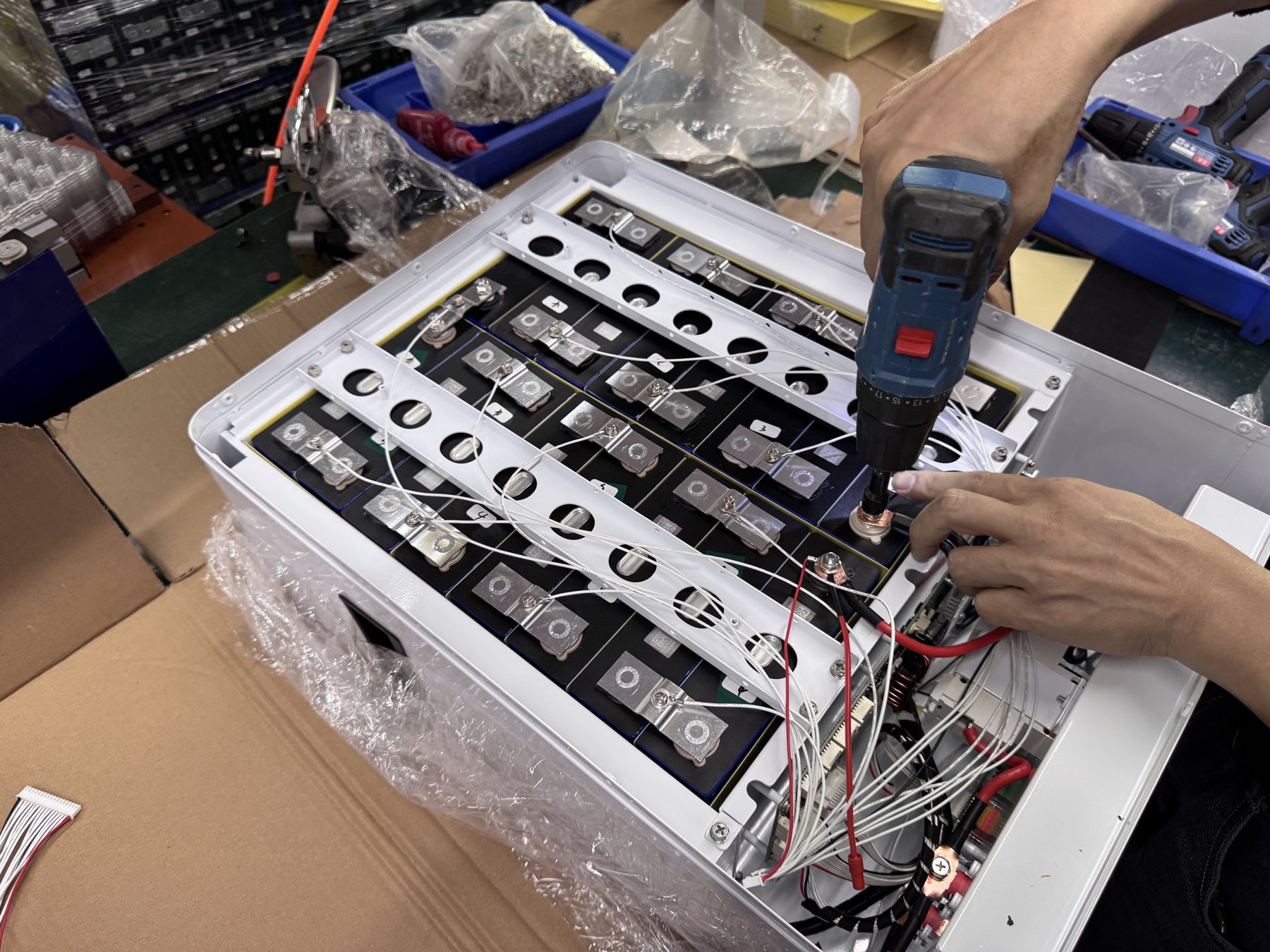
Qualified personnel should verify polarity, connector type, cable size and route, strain relief, insulation condition, bonding or grounding arrangement as specified, and the installed fuse, breaker or disconnect. Use the approved schematic and measurement procedure. A visual match is insufficient when similar connectors can be wired differently. The exact sequence for connecting or disconnecting the battery belongs in the model's approved manual and site method statement, not in a generic web article.
Review every protective device against the intended architecture. A fuse rating, breaker characteristic or cable cross-section copied from a different installation may fail to coordinate with the battery and host. Record the installed part numbers and settings. Where multiple modules are connected, verify the approved parallel or series arrangement and cable routing. Do not improvise a new topology in the field. If a protection device or cable differs from the drawing, pause and obtain a design decision.
Inspect communication wiring independently of power wiring. Confirm port, connector orientation, shield and termination scheme where specified, pin assignment and protocol setting. A CAN or RS485 label does not define the message map or physical connection. If the host does not recognize the pack, collect the configuration and logs before changing settings. Trial-and-error edits can hide the original cause and leave one site different from the approved fleet baseline.
Confirm the initial electrical state safely
Before closing a disconnect or enabling a charger, compare the battery's reported or measured condition with the model-specific receiving and commissioning instructions. The approved procedure may require checking pack voltage, state of charge, temperature, BMS status and alarms. Record values with the instrument, timestamp and unit serial number. If a reading is outside the permitted range, stop and ask the responsible engineer or supplier for an approved recovery procedure. Do not bypass protection to make a unit start.
For a multi-module installation, verify that the modules are approved to operate together and meet the required preconnection conditions. A mismatch can cause current flow or protective trips at connection. The exact balancing and connection method varies by product and must follow the supplier's instructions. Do not infer a safe tolerance from a generic chemistry article. This is an especially important hold point when units have been stored for different periods or came from different lots.
An initial state record is useful even when all readings are normal. It gives support engineers a baseline if a later alarm appears and helps distinguish a delivery issue from a site configuration issue. Include the installed host settings and any approved deviations in the same record. A screenshot without a serial number or time is weaker evidence than a short, complete commissioning sheet.
Bring up the host and battery in controlled stages
The first energization should follow an approved sequence with people, instruments and stop conditions named in advance. Confirm that the host settings reflect the final battery, including charge profile, current limit, voltage window, low-voltage action and communication mode. Record the parameter file or screenshots with version information. A controller may retain settings from an old battery even after a new pack is physically installed. That can lead to premature cutoff, inadequate charging or confusing alarms.
Verify basic communication and status before applying normal load. Check that the host identifies the battery where required, reads plausible voltage and state-of-charge information, and displays alarms consistently with the BMS. If the system uses a voltage-only interface, verify the agreed alternative monitoring and shutdown logic. Do not clear an unexplained alarm merely to complete a checklist. Capture the code, time, operating state and host logs, then investigate it against the approved integration plan.
Add load in planned steps. Observe voltage, current, temperature and host behavior at each stage. Check a representative start-up or peak event only within the safe test procedure and approved current limits. A battery may seem normal at idle but trip at a motor start or inverter surge. The commissioning record should say which operating modes were actually tested. If a test could interrupt critical service, the owner should approve a safe window or an alternative method.
Test charging and recovery as a separate function
A system that discharges correctly can still charge incorrectly. Verify charger or rectifier settings against the exact pack's approved profile, the host's operating range and any BMS-controlled limits. Observe current and voltage during a controlled charge period. Record whether the host enters the intended mode, whether the pack reports an alarm, and whether expected monitoring values update. Avoid extrapolating a full recharge time from a brief observation without an approved calculation.
Consider temperature and source changes. A pack may have distinct charging behavior at low or high temperature, and a hybrid system may switch among grid, generator and photovoltaic sources. Test the transitions that are relevant to the project, not every imaginable scenario. If a mode cannot be safely exercised at commissioning, note it as an open item with an owner and future test plan. A commissioning certificate should not imply that untested modes were observed.
If the battery is part of a backup system, simulate a controlled primary-power interruption if the operator permits it. Check that essential loads remain supported, alarms reach the intended monitoring point and charging resumes after restoration. The telecom backup autonomy guide shows how runtime should be defined and verified at a real site. Commissioning can confirm transfer and a limited load test, while a full autonomy claim requires a test or calculation that matches the agreed conditions.
Verify protective and alarm behavior without creating unsafe faults
The commissioning plan should list the alarms and protective responses that can be checked safely through approved controls or simulations. It might include communication loss, a host warning, a service disconnect indication or a controlled low-charge alert. Deliberately shorting terminals, overheating a pack or bypassing protection is not a valid field test. The exact permissible methods belong to the product and site safety documentation.
For each tested event, capture what the battery reports, what the host displays, what the monitoring system receives and how the system recovers. A BMS fault that is visible only on a local screen may be operationally inadequate for a remote site. Conversely, a latched alarm that requires a manual reset may be intentional; the team must know the approved recovery sequence. If the host and battery disagree about a fault, retain both logs and avoid undocumented setting changes.
Write the acceptance criteria before the test. “Alarm works” is too vague. Specify the event, the expected local indication, remote notification, time record and permitted recovery action. Mark untested alarms separately. Where safety testing requires specialized equipment or a laboratory, refer to the applicable model-specific report rather than staging a hazardous field demonstration.
Document the handover as a usable operating baseline
A useful as-built package includes the installed serial numbers, cabinet or equipment location, drawing revision, protection parts and settings, host and BMS firmware, communication configuration, measured initial electrical state, test results, open items and owner sign-offs. Include clear photographs of labels, cable routes, disconnects and final installation. This helps future technicians compare a faulted site with the accepted baseline. It also prevents a later replacement module from being configured from memory.
The owner should receive the approved operating and maintenance instructions for the exact model. Specify normal inspection points, alarm response, isolation procedure, storage guidance for spares and the route for technical support. Do not invent a universal inspection interval or warranty term; use the project agreement and supplied manual. If a site operator needs training, record who attended and what was covered. A handover is incomplete when the only person who knows the settings is the installation contractor.
Close exceptions deliberately. An open item should state the observation, impact, temporary control, owner, due date and evidence needed for closure. A minor cosmetic issue can be handled differently from an unexplained protective trip or a missing safety document. Never let a schedule-driven “conditional pass” hide a condition that affects safe operation. The decision to place a system into service belongs to the authorized project owner.

Prepare for remote support before the first fault
The support process works faster when the commissioning packet already contains the exact configuration. If a later issue appears, provide the order reference, model, serial number, host model and firmware, fault time, frequency, operating mode, recent changes, voltage, current, temperature, state of charge, alarm codes and relevant screenshots. Add photos of cable connections, protection devices and environmental conditions. For a transport damage question, preserve receiving and packaging evidence.
Classify a safety event separately from a performance question. Smoke, abnormal heat, leakage or swelling calls for the site's emergency procedure and qualified personnel. An intermittent state-of-charge display issue needs logs and configuration comparison. A capacity complaint needs a defined load and test condition. Do not assume every symptom is a battery defect or a host defect before the evidence is reviewed. YZL POWER's source support procedure uses an evidence-first diagnostic process; the applicable contract and approved customer-facing procedure determine any specific remedy or response obligation.
Do not return a suspect lithium battery without written instructions from the responsible party and the relevant transport process. The shipping paperwork for one model or an earlier delivery may not cover a different unit, damage condition or route. Keep the battery isolated under the site's safety process while the support team determines the next step.
Common commissioning mistakes to avoid
A frequent mistake is accepting a product because the voltage label, case and connector appear familiar. The host may use different charge settings or message mapping, and the terminal arrangement may differ. Another is skipping the receiving record and discovering damage only after the carton is discarded. A third is using a supplier's factory test as a substitute for a field integration test. Factory testing and commissioning answer different questions.
Teams also lose evidence by changing several parameters at once when the host reports an alarm. A controlled change log should name the original setting, reason, approver, affected unit and test to repeat. If multiple sites use the same configuration, the team should know whether the change applies to one exception or the fleet baseline. This field checklist records what was actually installed and tested.
Finally, avoid certifying unobserved performance. A brief start-up test does not prove full backup autonomy, long-term reliability or compliance in every market. State which functions were observed, which values came from model-specific documentation, and which acceptance items remain open. Honest boundaries make the handover more valuable to both buyer and supplier.
Frequently asked questions
Can the receiving team energize a battery to see whether shipping damaged it?
Follow the site's safety process and the exact model instructions. Do not energize a package showing impact, leakage, swelling, heat or other suspicious signs. Qualified personnel should assess it, document evidence and obtain an approved decision. Powering on is not a reliable substitute for a receiving inspection.
What should be checked when a delivered pack differs from the approved drawing?
Place that unit on hold. Compare its label, connector, dimensions, hardware and firmware with the purchase and design records. Ask engineering to determine whether the change affects fit, protection, communication, documents or tests. Resume only after an approved revision or replacement is recorded.
Is one successful start-up enough to sign commissioning?
No. At minimum, the approved plan should cover identity, mechanical installation, wiring and protection, host settings, normal operation, charging, relevant alarms and the required handover records. The precise test scope depends on the system and risk. A first start is one observation.
How should several modules be connected?
Use only the exact arrangement approved for those models and revisions. The supplier and system designer should provide the connection sequence, protective devices, communication configuration and preconnection checks. Generic instructions for parallel batteries are not a substitute for that design.
Who determines the warranty outcome if a problem appears later?
The signed contract, purchase terms and approved support procedure control the commercial outcome. A complete commissioning baseline and fault evidence help the parties identify cause and a practical remedy. This article does not create a universal warranty period or automatic replacement promise.
Conclusion and project discussion
Field commissioning is a sequence of evidence gates: receive the correct units in documented condition; store and install them under the approved design; verify wiring, protection and host configuration; observe controlled operation, charging and alarms; and hand over an as-built baseline. Each gate should have a clear owner and a stop condition. This approach helps a B2B buyer distinguish a product issue from a transport, installation or integration issue without relying on guesswork.
For a new installation, share the equipment model, approved electrical drawing, host firmware, environmental conditions, order quantity and destination with YZL POWER. Review the product directions, quality approach and support process, then ask [email protected] or WhatsApp +86 138 0280 9405 for model-specific installation and commissioning documents. The final site procedure should be approved by the responsible project engineer before work begins.